
Context
CIO Connect Hub is TELUS's internal intake tool for submitting requests that need CIO resources. Any new project, idea, or operational need involving CIO teams starts here. The tool determines what's being asked, who should work on it, and whether it's funded and feasible.
The CIO department has approximately 6,000 employees and manages all IT infrastructure behind TELUS's telecom services. The tool launched in July 2025, replacing a fragmented system where each CIO subgroup maintained its own intake form. It now receives over 100 submissions per month.
My Role
The final shortlisted concept was mine, from discovery to final wireframes. I carried it from the first messy round of problem-framing through to the high-fidelity mockups.
I ran the AI side too. I wired Claude Opus into Figma over MCP so it could critique the real frames, live, as I built them. It became the thing I argued my design decisions against. Acting as the key persona, it allowed our team to have a user group directly in our pockets.
The Problem
The Numbers
Volume was never the problem. The submissions that came in were usually incomplete or in the wrong place.
67%
Bounce Back Rate
40%
Wrong Submission Type Selected
Every submission runs through a single triage prime. One person, catching every miss by hand.
Designing for the Right Audience
Connect Hub's user is a business-side employee who submits infrequently, often for the first time, with no sense of how CIO is structured.
Research
Interviews
I conducted seven structured interviews, recruiting participants through submission volume and direct involvement with the tool. Each interview was recorded with stakeholder permission and fed into Claude Opus for synthesis alongside the team's own analysis.
Leadership
Group Product Manager
TELUS
Product Manager
CIO Connect Hub
Builders
Product Designer
TELUS CIO
L5 Product Designer
CIO Connect
Pipeline
Technical Program Manager
TELUS CIO
Triage Prime
CIO Connect Hub
Out of Scope
Power Submitter
TELUS
One participant was identified as an outlier and excluded from synthesis. Their use of the tool fell outside its intended scope entirely.
Findings
Submitters don't understand CIO's language.
The form uses internal terminology that means nothing to people outside the department. Even a product designer on the CIO Connect team could not pick the right engagement type for his own request.
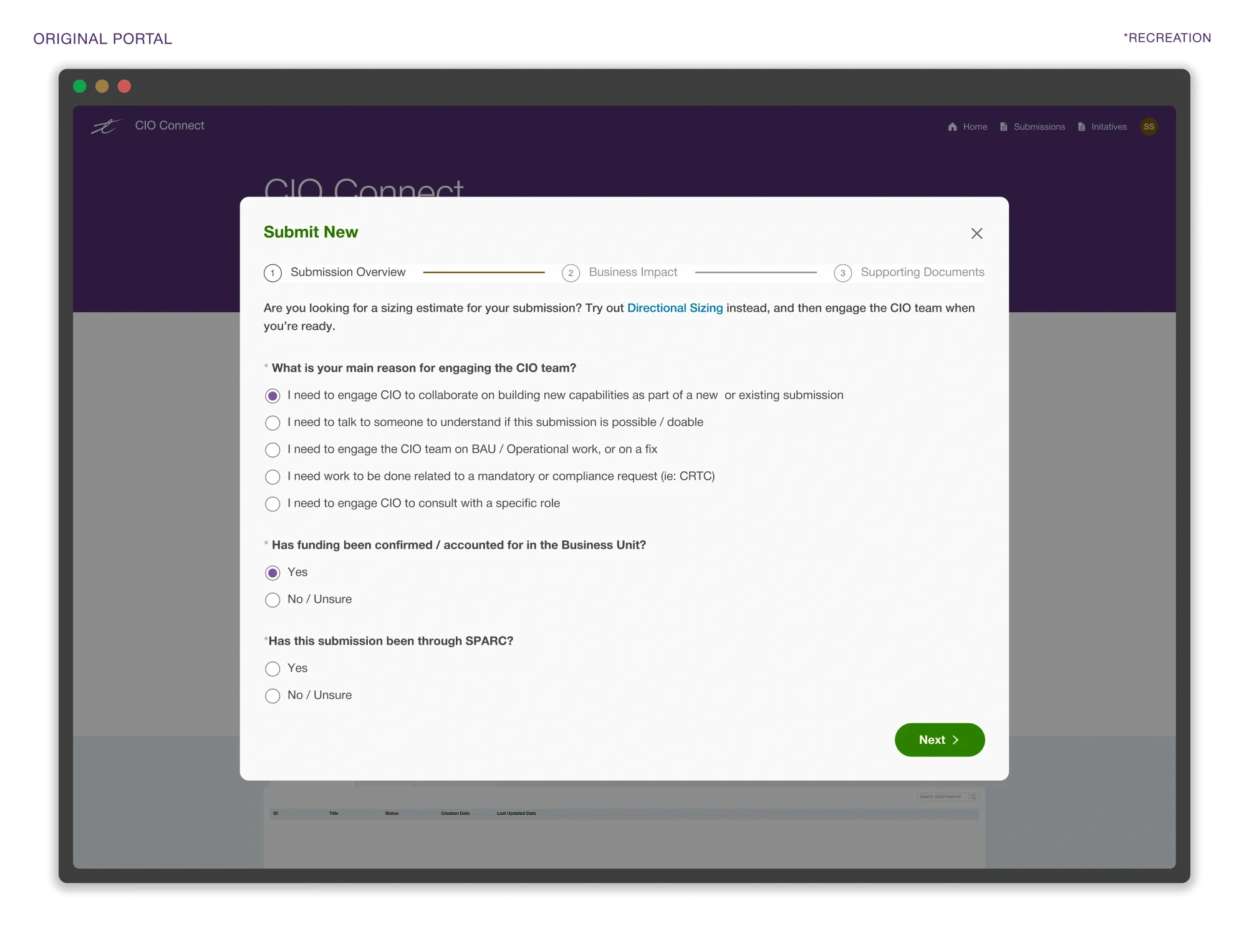
Submitters have no guidance on what a good submission looks like.
There are no examples, no field explanations, and a lack of feedback during or after submission. Although AI feedback exists, you cannot ask for any follow ups or context.
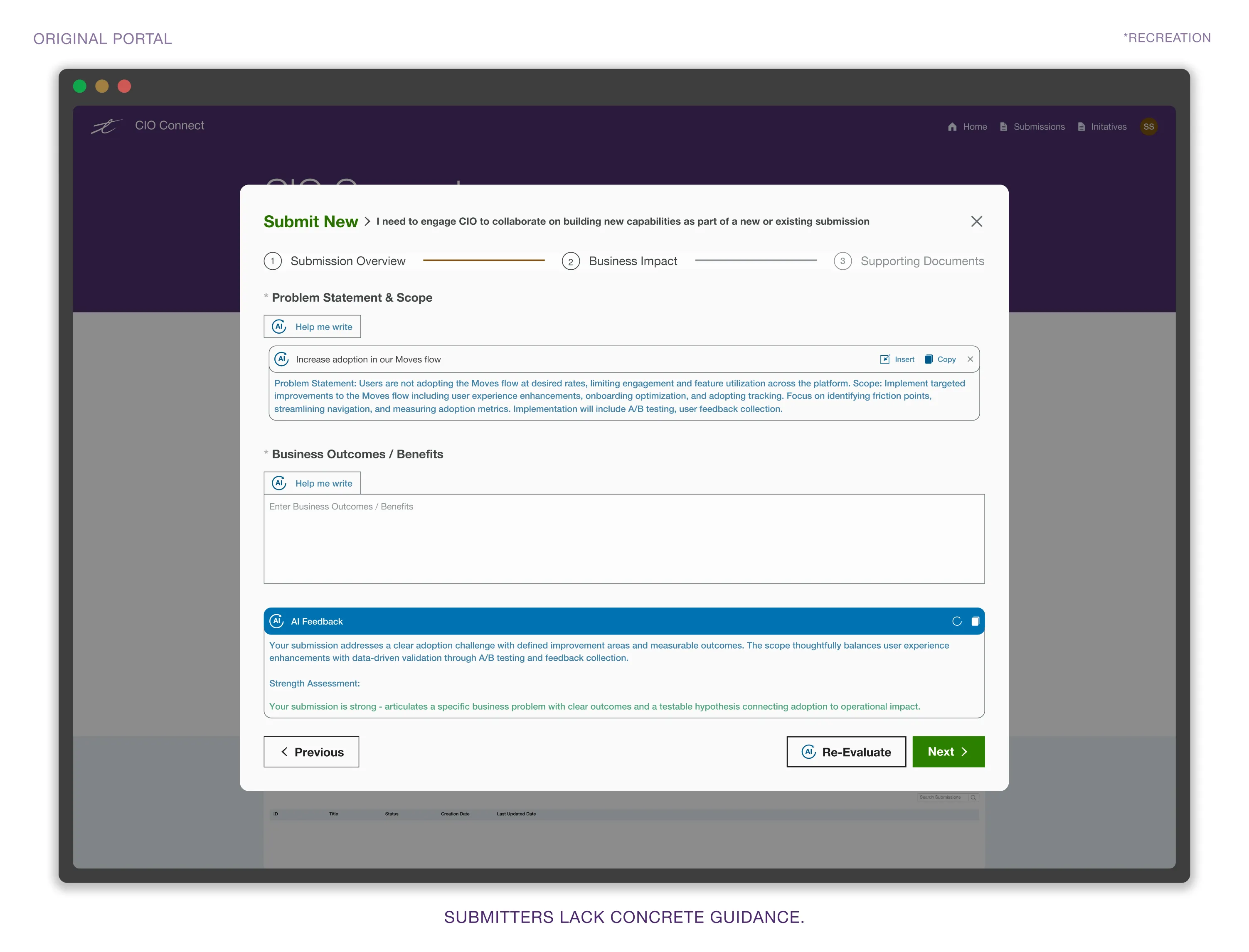
The post-submission experience is a black box.
Nearly every participant raised this unprompted. After submitting, there is no status update, no timeline, and no visibility into what happens next.
Large variance in usability.
Usability ratings ranged from 29 to 95 out of 100. The same tool worked for some people and failed completely for others.
Constraints
Our research surfaced a problem that design alone couldn't solve. The post-submission black box would need automated routing to fix, which is a backend change. We documented it in the specification handoff and flagged it as a priority for TELUS to own.
What we could address was upstream: the submission experience itself.
The Diagnosis
The submission experience asks submitters to do something they have no way to do well. They are expected to know CIO's internal language, identify the correct engagement type from a list built around CIO's org structure, and translate their own needs into fields with no guidance or examples. Most submit rarely. When they get something wrong, the form doesn't tell them.
1
Submitter fills out form.
2
Triage prime receives an incomplete submission.
3
Manual cleanup through Google Chat.
4
Reroutes to the proper channel.
Problem Statement
How do we design a submission experience that reduces the burden on the submitter and produces higher quality requests?
Solution
Developing the Idea
One concept was a Template Library: submitters start from a pre-built template for common request types instead of a blank form. It gives structure before people hit CIO's terminology, but they still have to find the right template first:
"I wouldn't want to spend time browsing. I'd want to spend the least amount of time on this process."
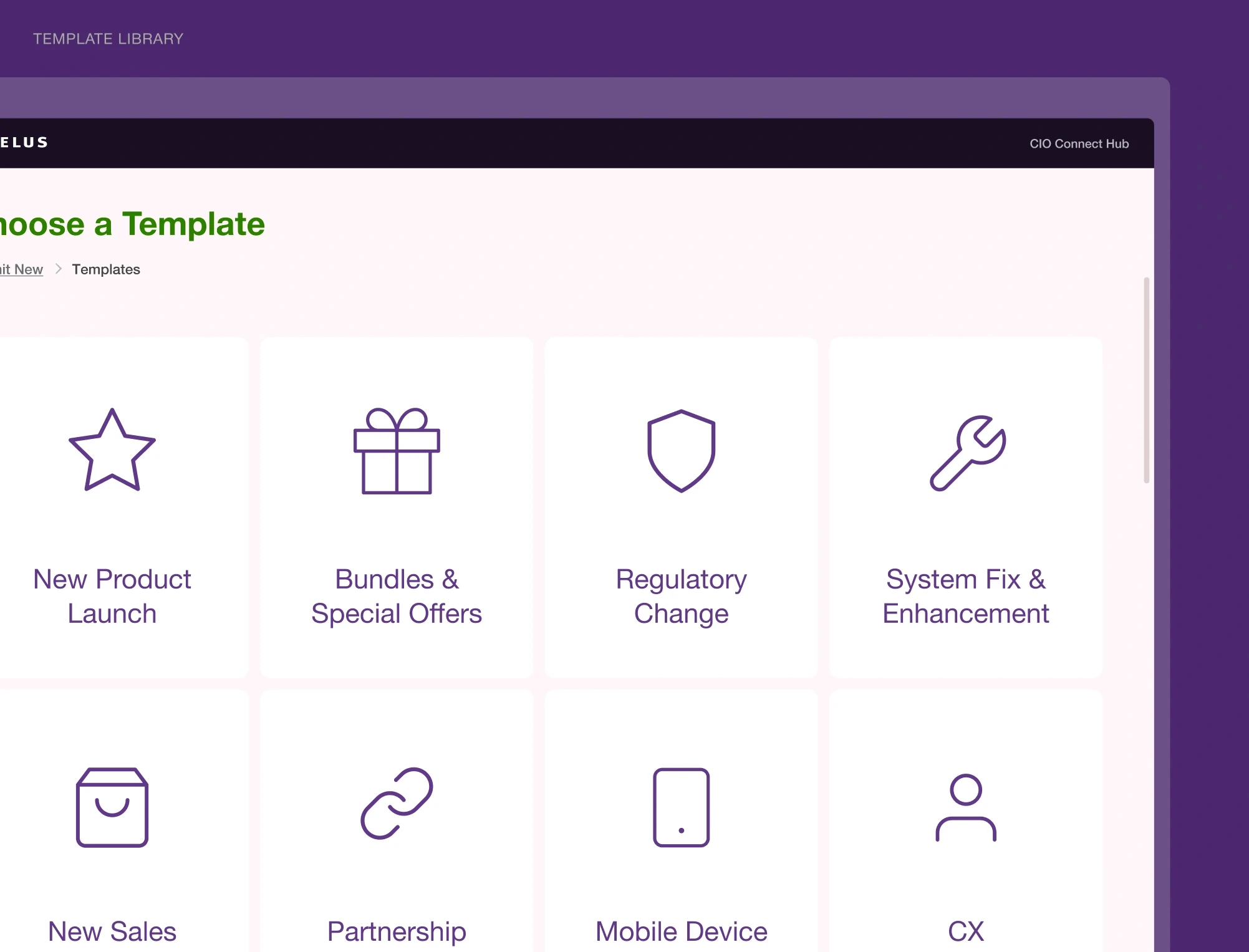
Template Library concept. Pre-built starting points for the most common CIO request types.
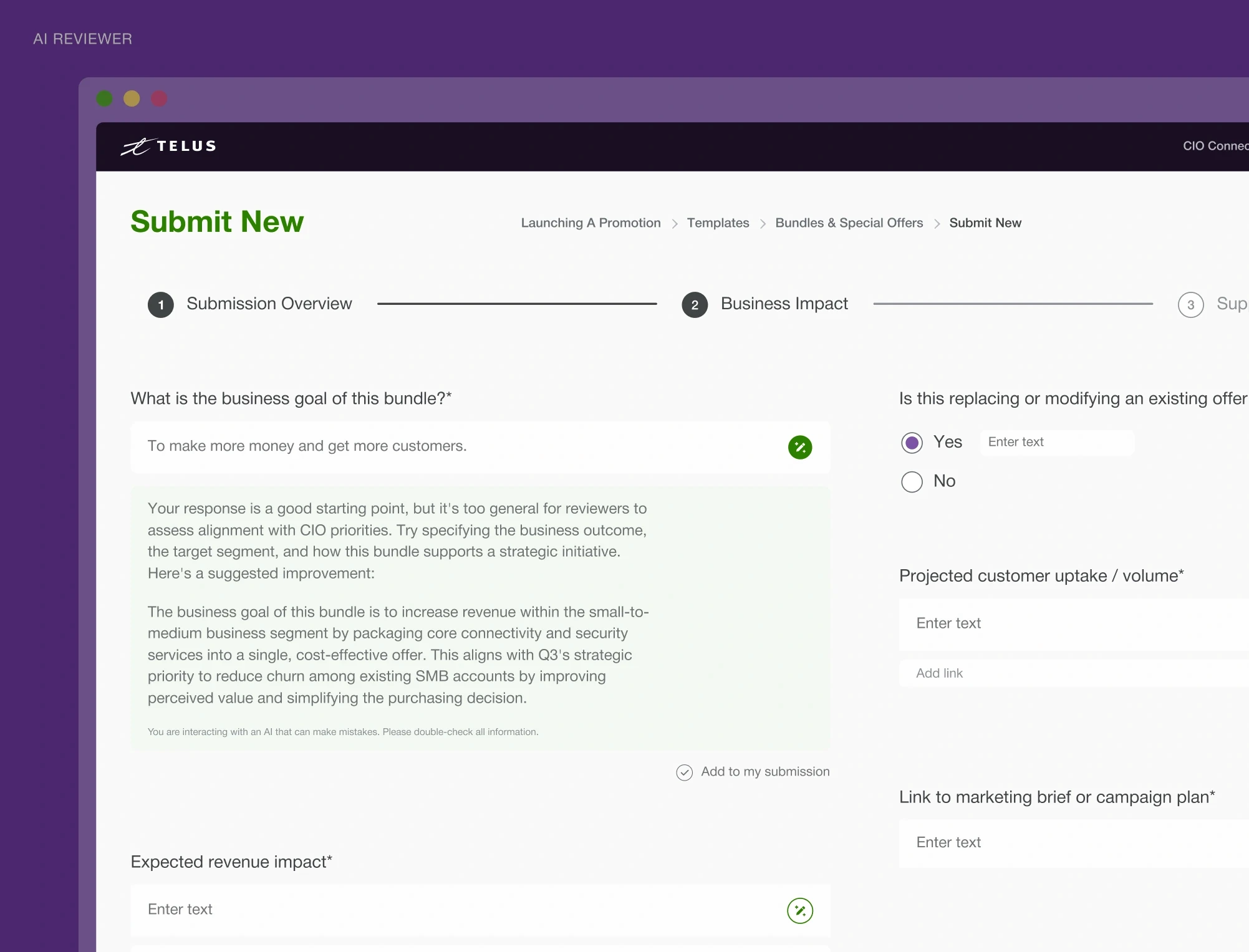
AI Reviewer concept. Real-time checks that catch gaps before submission.
The stronger concept was an AI Reviewer. As the submitter writes, an AI checks the request in real time and flags gaps, vague answers, and the wrong request type before anything reaches the triage prime. It gives the feedback the original form never did.
The Template Library solved structure; the AI Reviewer solved quality. The final solution, The Smart Form Experience, solved both at once, replacing the form itself with a guided conversation.
The Smart Form Experience
The form should carry the translation so the submitter never has to.
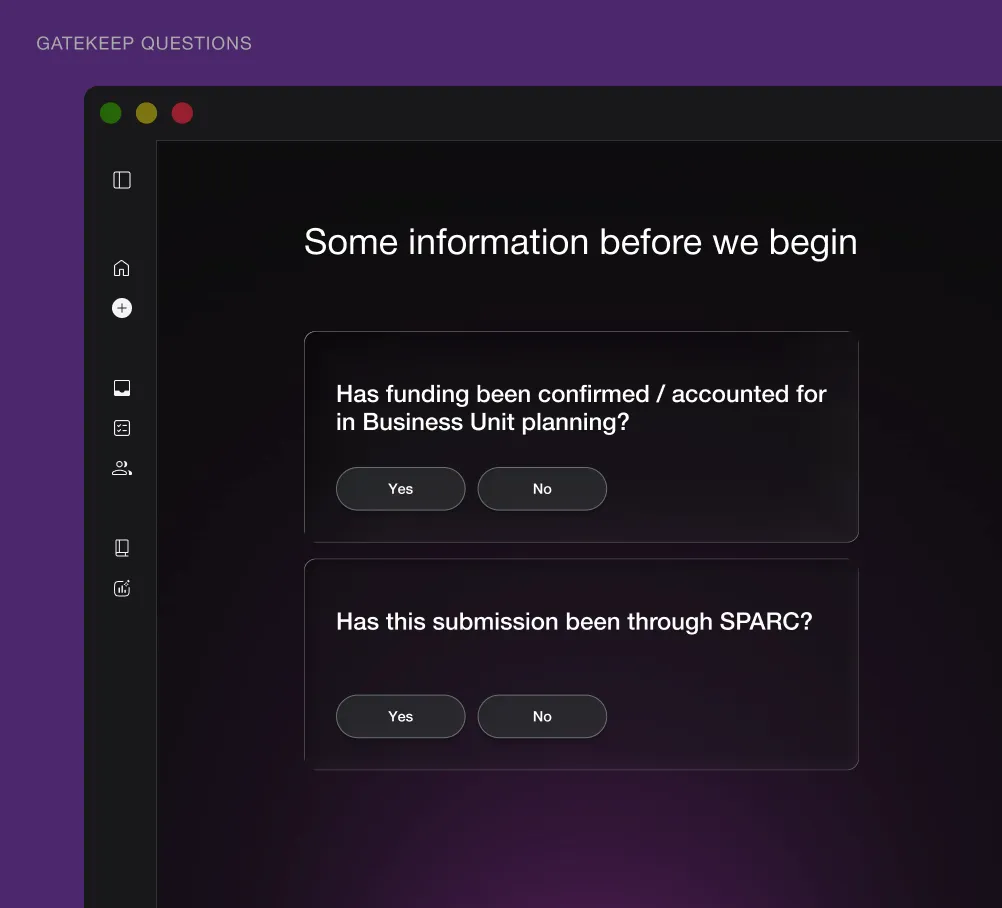
So I flipped the order. Before the form even opens, the submitter answers two quick prerequisite questions. They were always in the original form, just buried near the bottom. Moving them up front means someone finds out they're in the wrong place before sinking ten minutes into a submission that was never going to land.
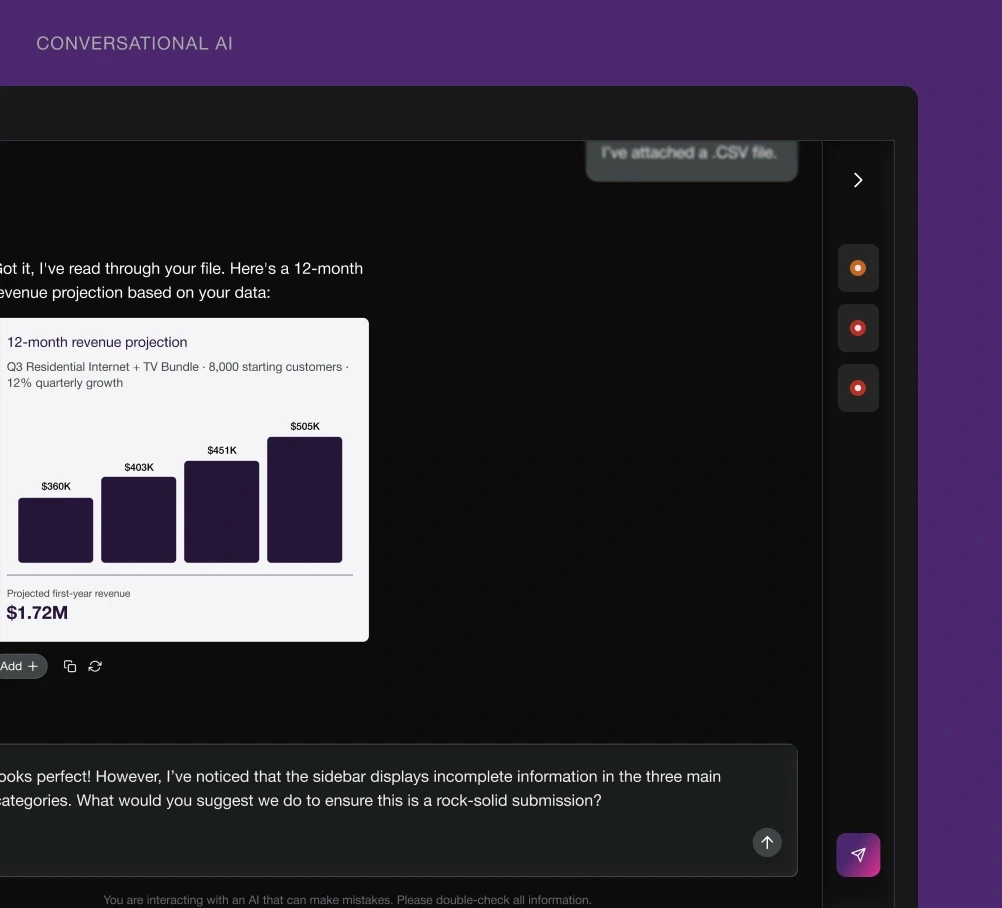
Inside, the submitter just describes what they need in plain language, and the AI builds the submission alongside them as they go. They can drop in raw data files and the AI turns them into structured charts right there in the conversation. The sidebar keeps score, each section going green as it fills in.
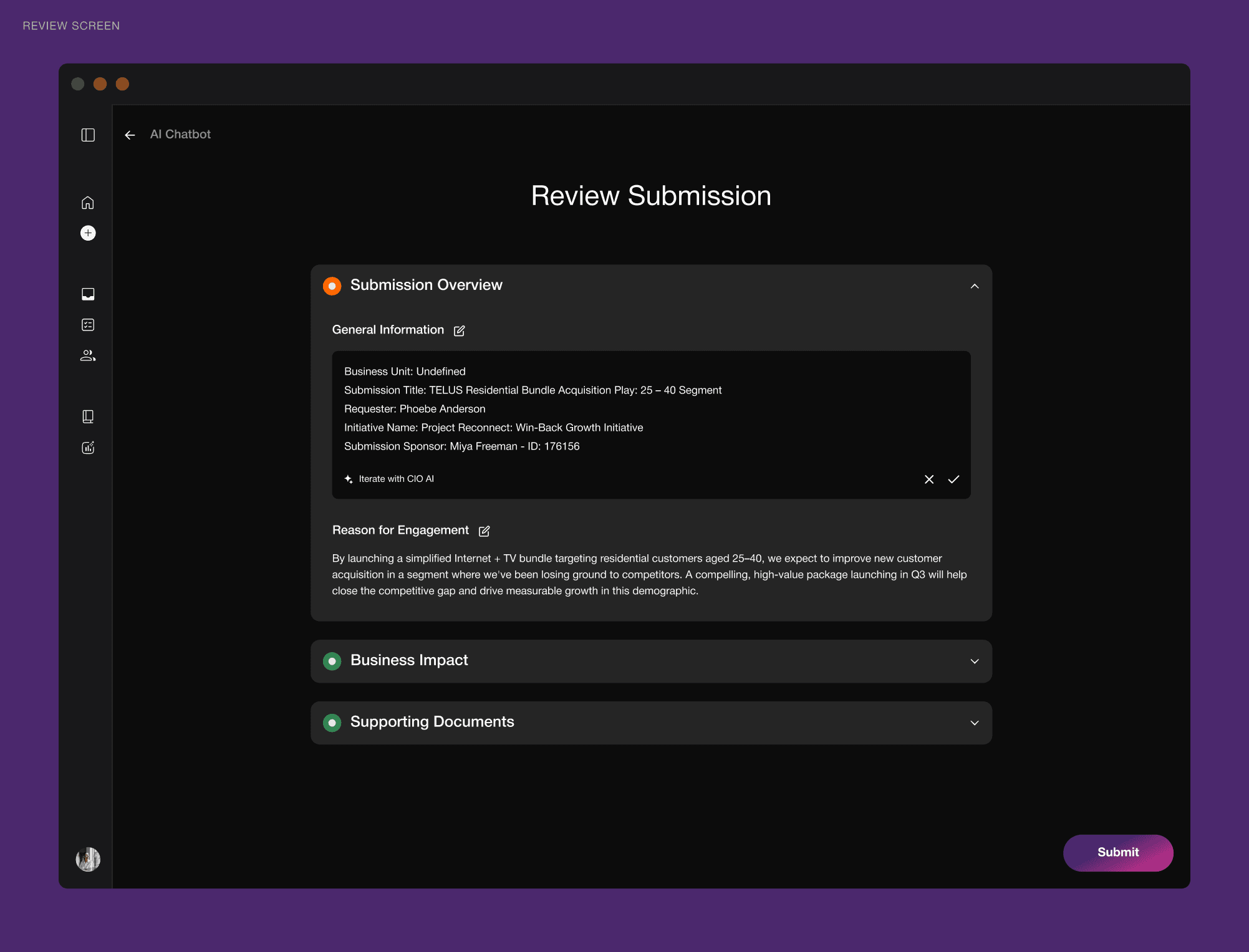
Nothing sends until the submitter sees the whole thing laid out exactly as the triage prime will receive it. Anything off gets fixed inline or through more rounds of iteration.
Outcome And Reflection
Results
The Smart Form Experience was presented to TELUS product leadership. A senior product designer on the CIO Connect team confirmed the artifacts would be forwarded directly to the developers, with positive feedback from the product manager on the projected impact to operations and intake.
An L5 product designer confirmed the concept was technically feasible, built around internal Claude infrastructure TELUS already used.

Reflection
–
Talking to people beats surveying them. Sitting across from stakeholders surfaced things a survey never could, like how the CIO Connect team actually felt about handing part of their own tool to an AI.
–
Get the real user in the room earlier. I leaned too CIO-internal, and it showed. Next time, first-time business-side submitters go in from the start.